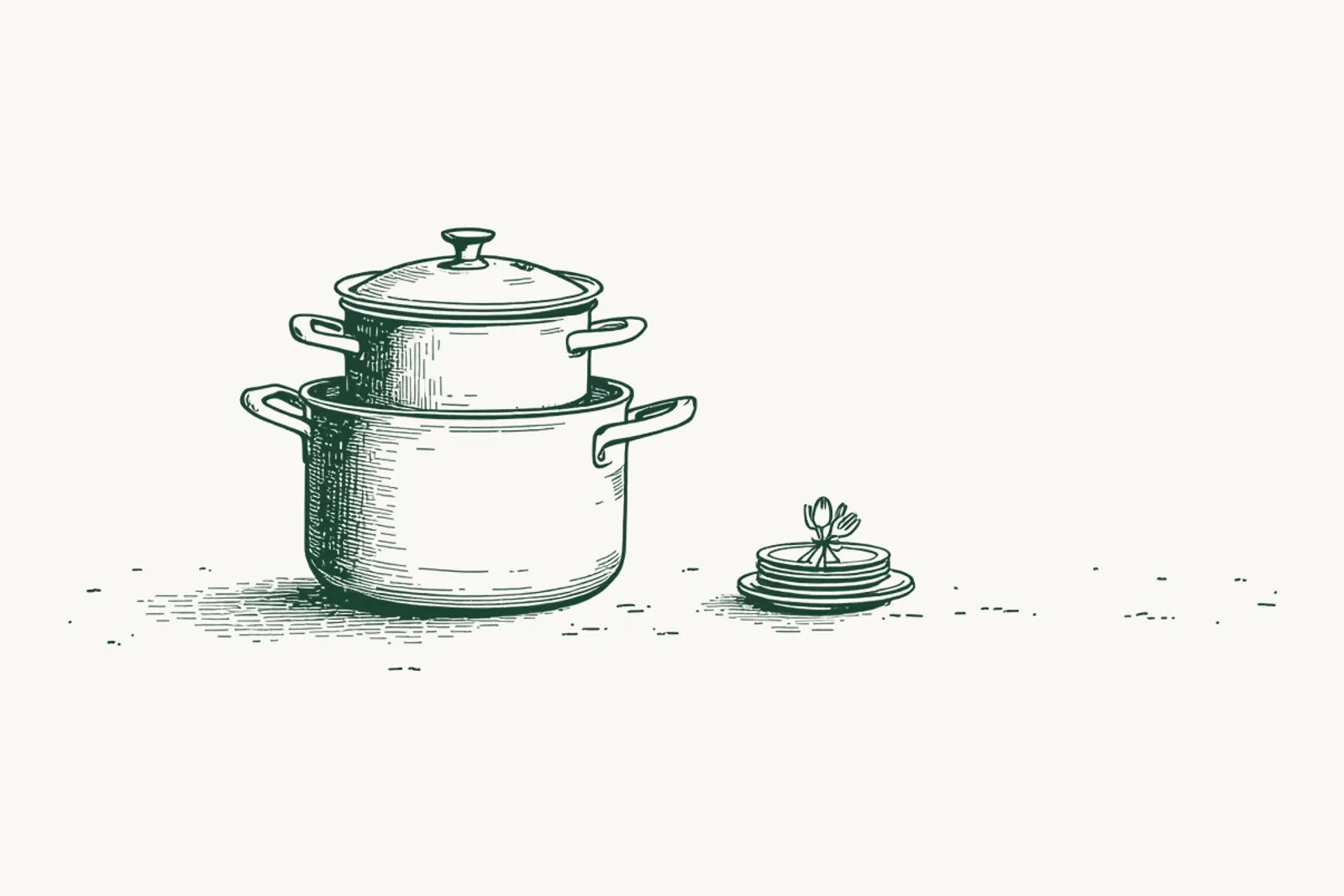
What tableware and pots to take camping
One pot, one pan, a bowl, a mug and cutlery per person cover nearly every meal. Materials, packed size and washing up at camp: the choices that matter.
Cooking outdoors takes little equipment, provided you choose the right pieces. A reliable stove, cookware sized for the number of people and a clear system for putting things away are enough to make real meals, rain included.
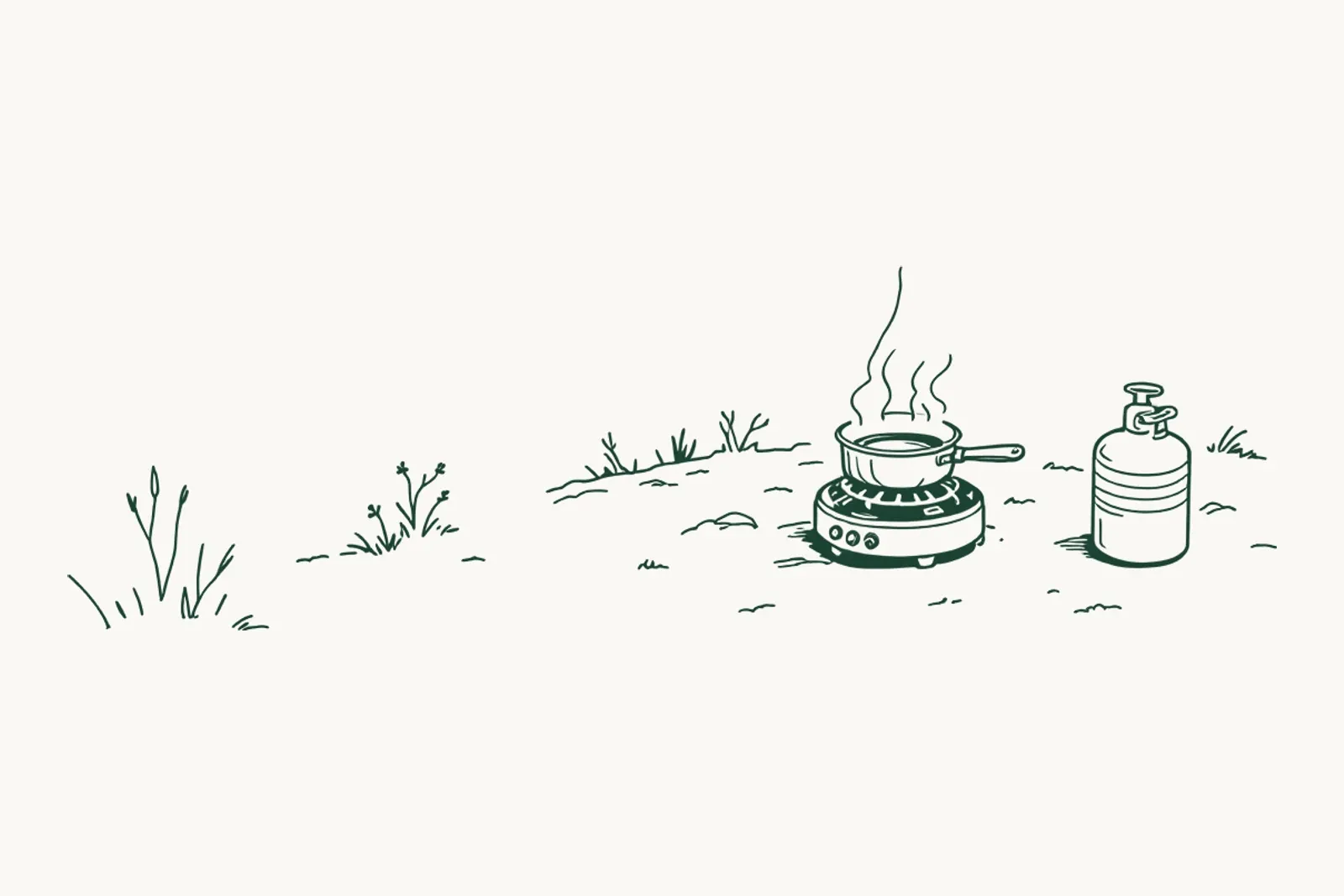
Three families share the use. Gas canister stoves dominate leisure camping: instant lighting, fine flame control, no maintenance. Their limits are cold, which drops canister pressure, and canister availability abroad. Liquid-fuel stoves work in deep cold and accept fuels you can find anywhere, at the cost of regular servicing. Wood and alcohol stoves remain fallback options: slow, but self-sufficient.
The detail is in our guide to choosing a camping stove.
A set that nests saves more space than a set that is merely light. Stainless steel resists scratches and takes direct flame, anodised aluminium heats fast and weighs less, and food-grade plastic is only for plates and mugs. Reckon on a one-litre pot for two people, a frying pan if you cook anything beyond boiled food, and a thin chopping board that doubles as a work surface.
The cool box, passive or electric, shapes the whole meal plan. A well-packed rigid box with ice packs holds for two or three days; a compressor cool box works like a real fridge but needs a power supply. Either way the rule is the same: fill it as full as possible, open it as little as possible, and keep the perishable items at the bottom.
The wider organisation of the cooking area, from storage to washing up, is covered in how to organise a camp kitchen.
One pot, one pan, a bowl, a mug and cutlery per person cover nearly every meal. Materials, packed size and washing up at camp: the choices that matter.
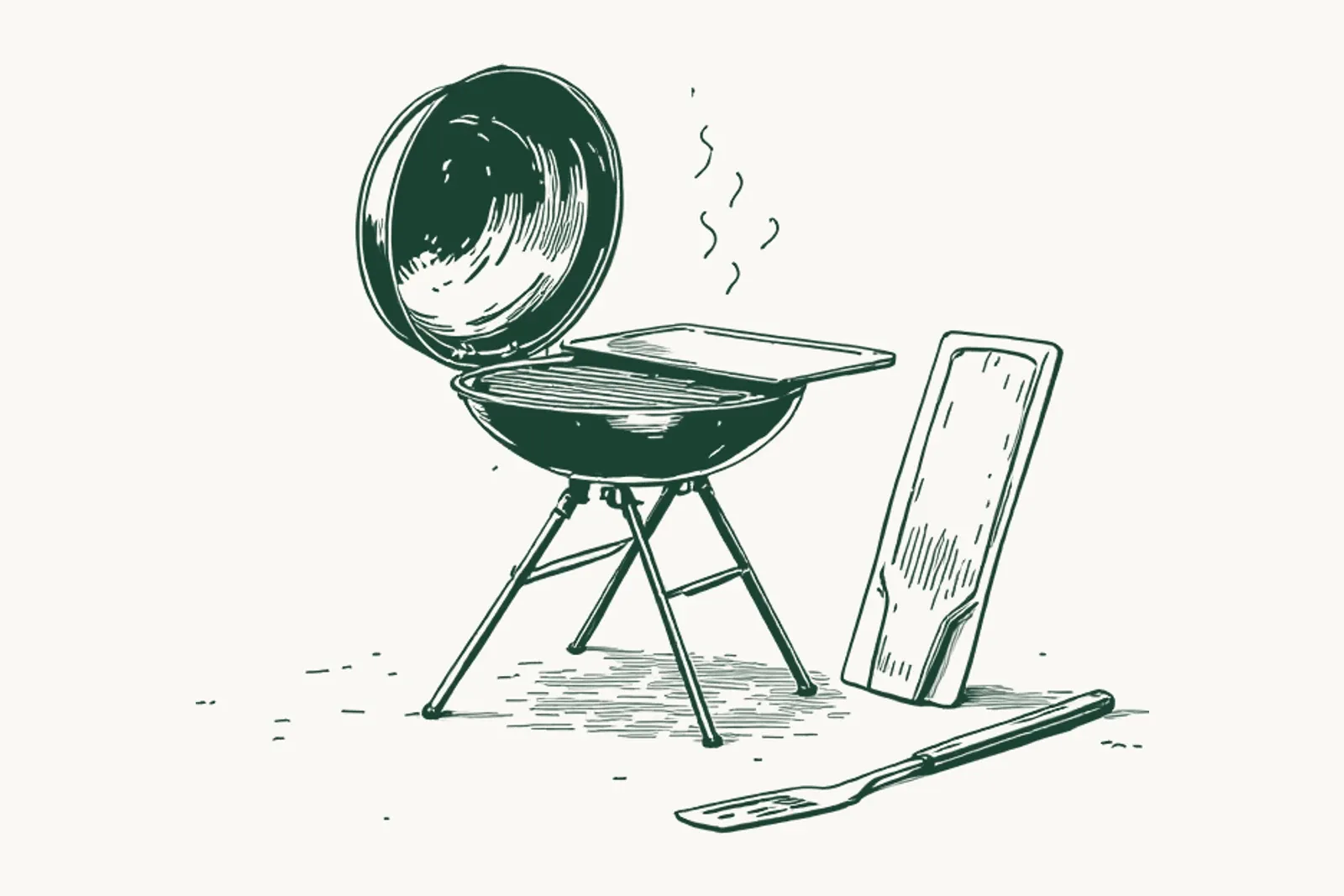
Charcoal, gas or a flat griddle: what campsite rules allow, what the fat does differently on each, and how you clean up with no hot water on the pitch.
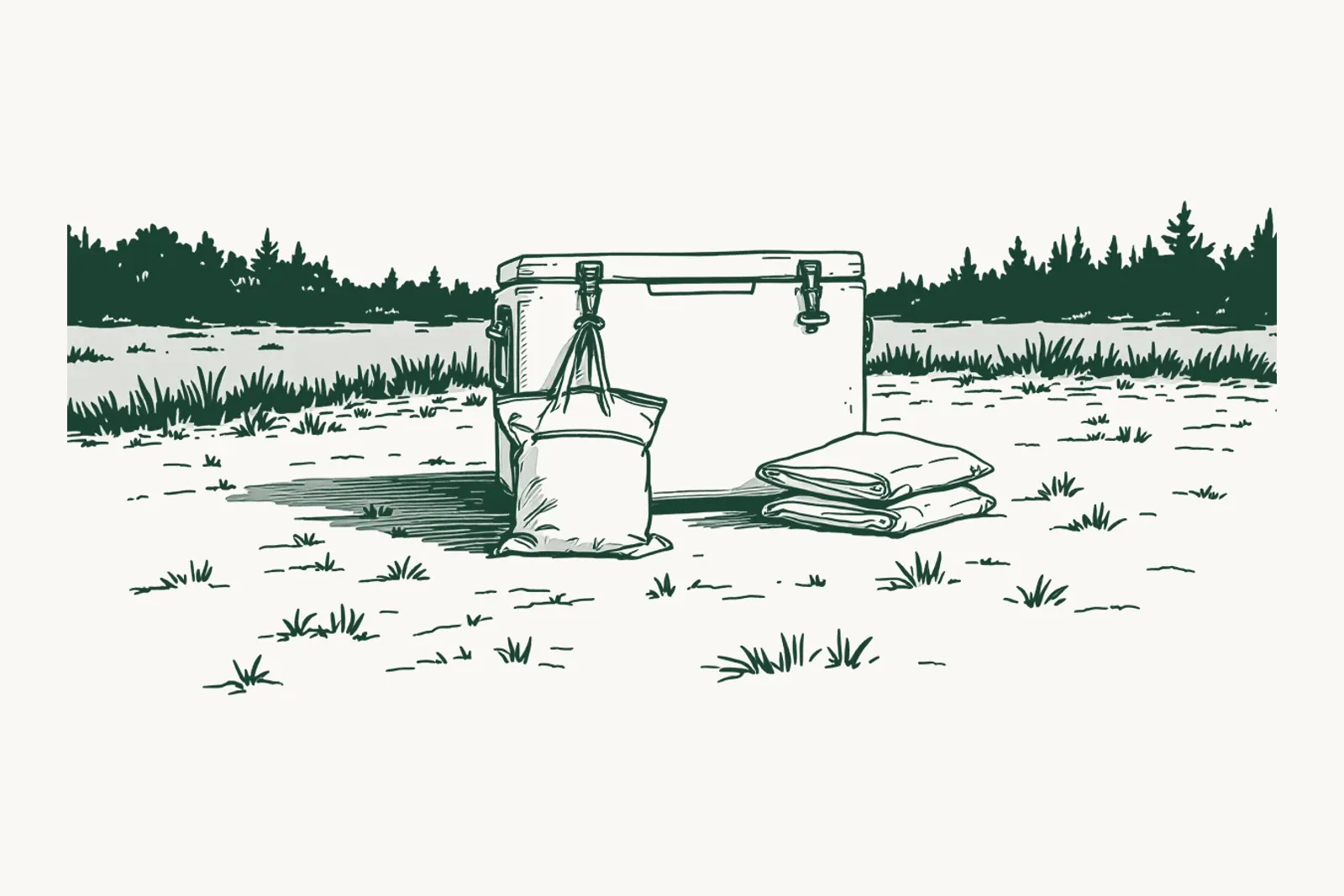
Soft, hard-shell, thermoelectric or compressor: what each cool box technology actually holds, and what really extends its runtime in camp.
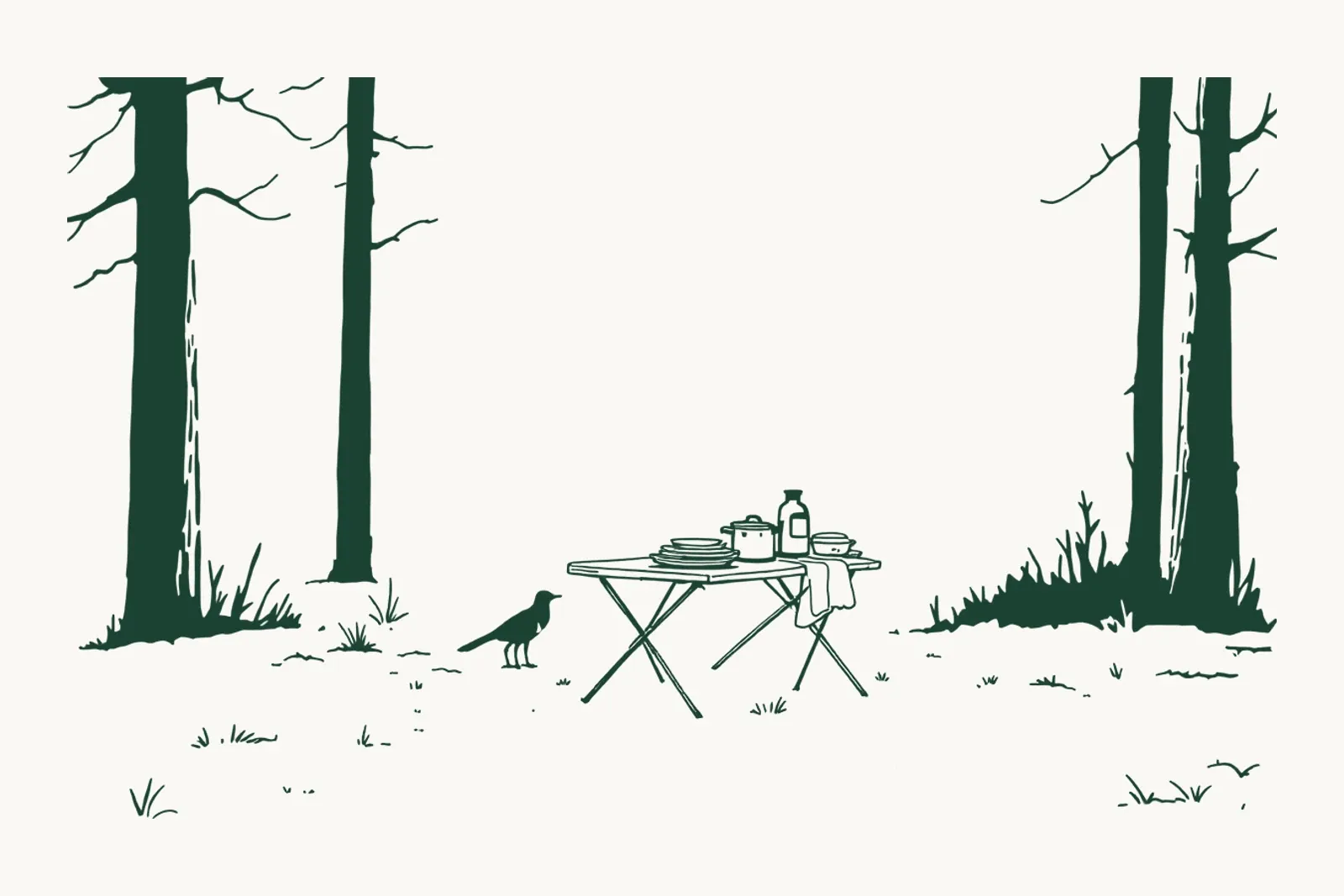
Organising a camp kitchen: where to set it up, the kitchen crate, managing water and the cool box, washing up, food safety and simple menus.
Comparing camping stoves: gas canister, multi-fuel, alcohol, wood and double burner. Fuel autonomy, cold weather, weight and safe use.