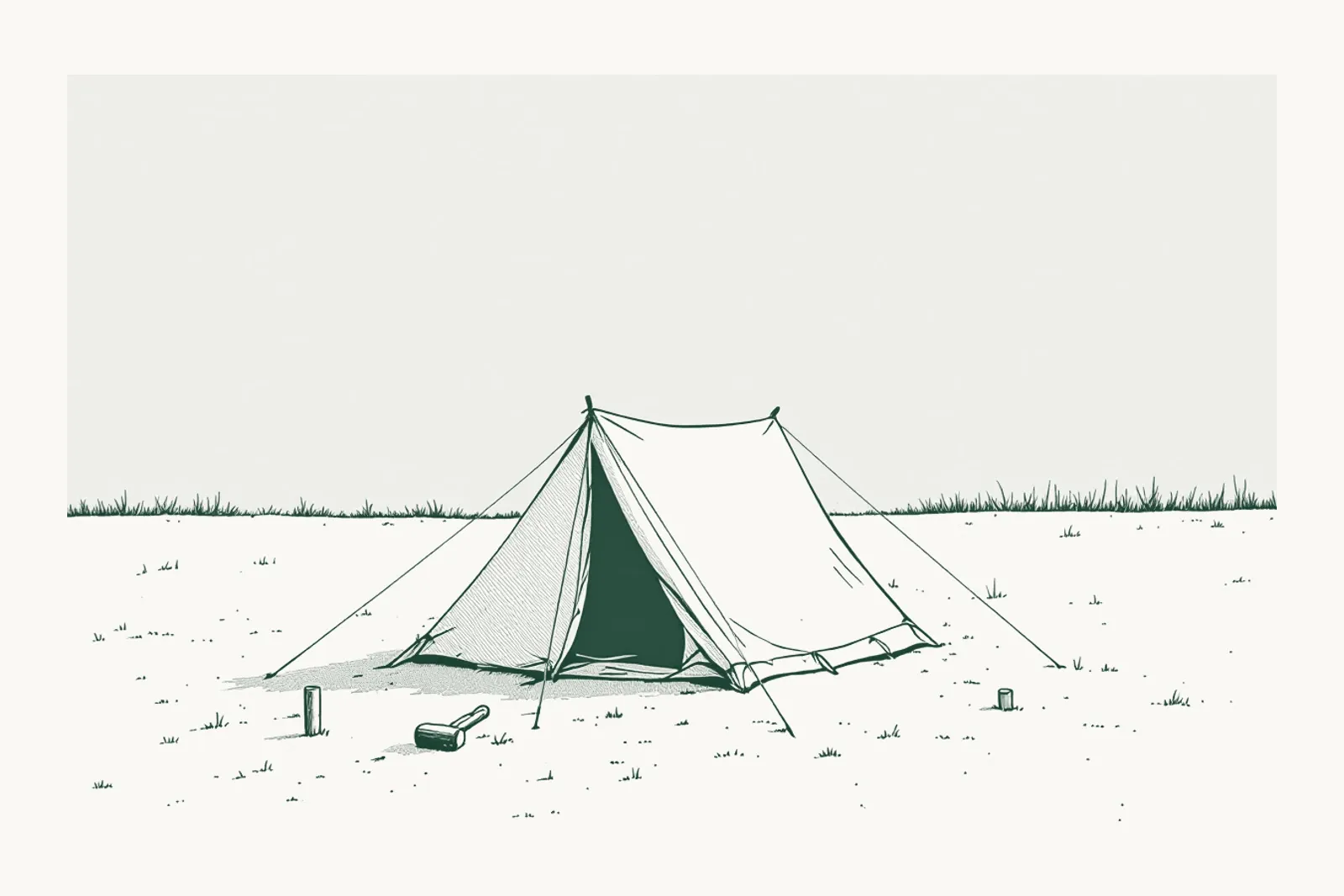
How do you pitch a tent so it survives strong wind?
A tent that blows away has almost never failed structurally: orientation, pegs and guy lines explained so it stays put when the wind picks up.
The tent is the most structuring item you own: it decides how well you sleep, how much space your kit takes up and, often, which sites you can reach at all. A five-berth family tent weighing 15 kg and a 1.4 kg bivouac shelter answer opposite briefs, and neither is better in the abstract.
Four criteria explain most of the difference in price and use.
For a holiday pitch, where the tent stays put for several days, headroom and floor area matter more than weight. A tunnel tent or a multi-bedroom model gives you living space you can genuinely use when it rains.
For hiking or bike touring, every hundred grams counts. You want a low packed weight, a small packed size and a tent one person can pitch alone, in the rain, without laying the inner on the wet ground.
For bivouac, discretion and speed come first: a minimal dome, a tarp or a half-open shelter, depending on the forecast and local rules.
Most tents do not die of wear; they die of being packed away damp. Always dry the flysheet before folding, even after nothing worse than dew: a few hours of trapped moisture is enough to start mildew that lifts the coating. Store the tent loosely packed, somewhere dry and out of UV light, and refresh the flysheet’s water repellency when water stops beading on the surface.
A tent that blows away has almost never failed structurally: orientation, pegs and guy lines explained so it stays put when the wind picks up.
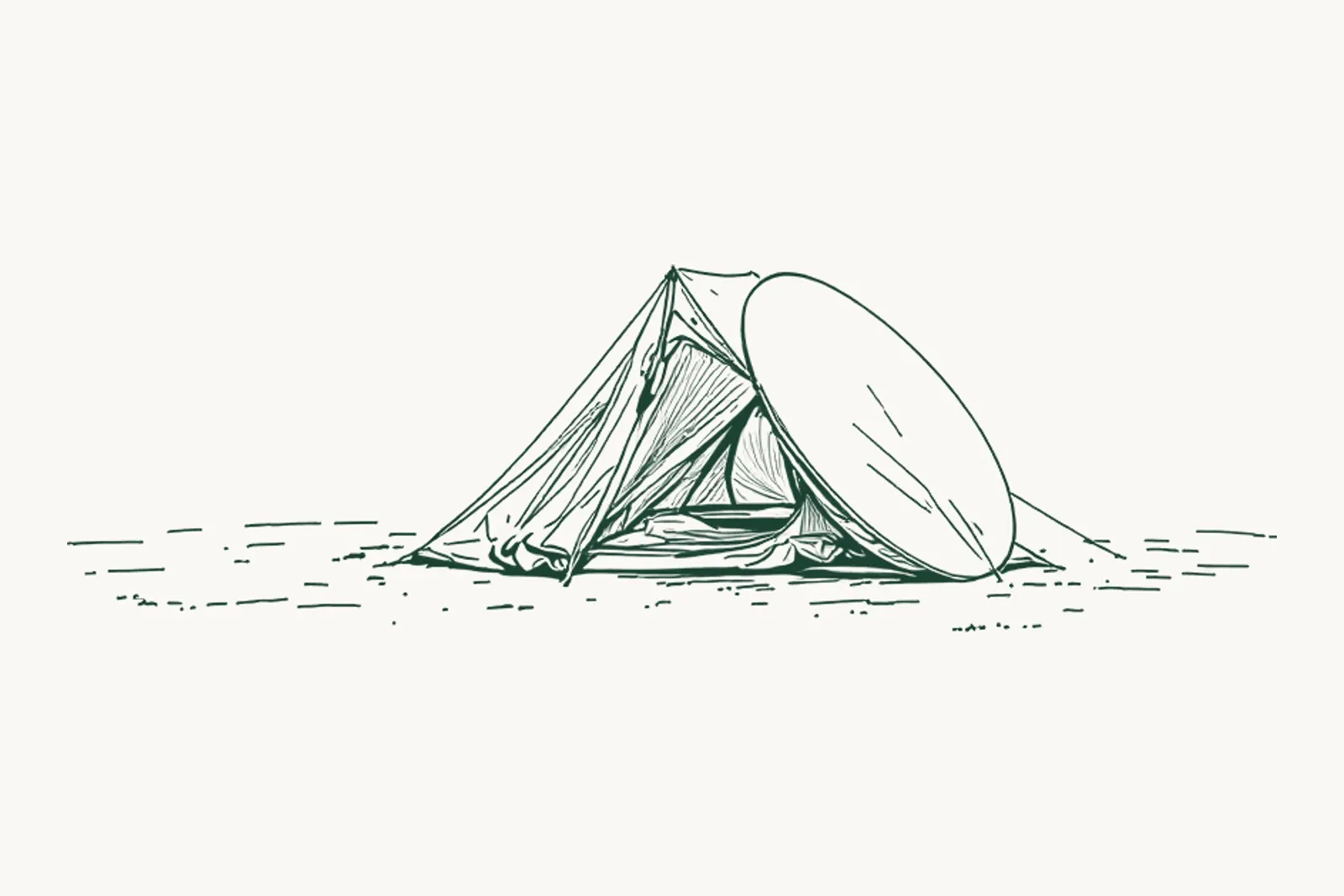
A pop-up tent pitches in seconds but folds awkwardly, packs bulky and struggles in wind: here's exactly who it suits and who should choose differently.

Choosing a camping tent: real capacity, season rating, hydrostatic head, shapes, structure and pitching. The criteria that genuinely matter for your use.