
How to choose a camping shower
Solar bag, pressure pump or electric: what each one needs on the ground, how much water a shower really takes, and where the soapy water goes.
Furniture is useless when you are moving every day and transformative when you are not. As soon as the car is parked beside the tent and you are staying several nights, a stable table and decent seating change the whole living space.
Two formats dominate. The suitcase table, whose top folds in half, is rigid and quick to set up, but bulky when packed. The roll-top table, made of slats, packs into a narrow bag and weighs less, at the cost of a slightly less stable surface for chopping.
Always check for adjustable height and wide feet: on soft ground, thin legs sink and the table becomes unusable.
A camping chair is judged on three things: seat height, stated maximum load and how the feet behave on soft ground. Low beach-style chairs are comfortable at rest and awkward for eating at a table. Classic steel-framed folding chairs are sturdy and heavy; aluminium-framed models that break down into a bag halve the weight.
A fabric storage unit on a frame saves you living out of bags and keeps food off the damp ground. For light, separate three needs: a lantern for the living area, a head torch for moving about and precise tasks, and a small light inside the tent. Prefer USB-rechargeable sources, compatible with the power bank you already carry.
An awning or tarp pitched over the table completes the set: it doubles the usable area the moment it rains, for modest weight and cost.
Solar bag, pressure pump or electric: what each one needs on the ground, how much water a shower really takes, and where the soapy water goes.
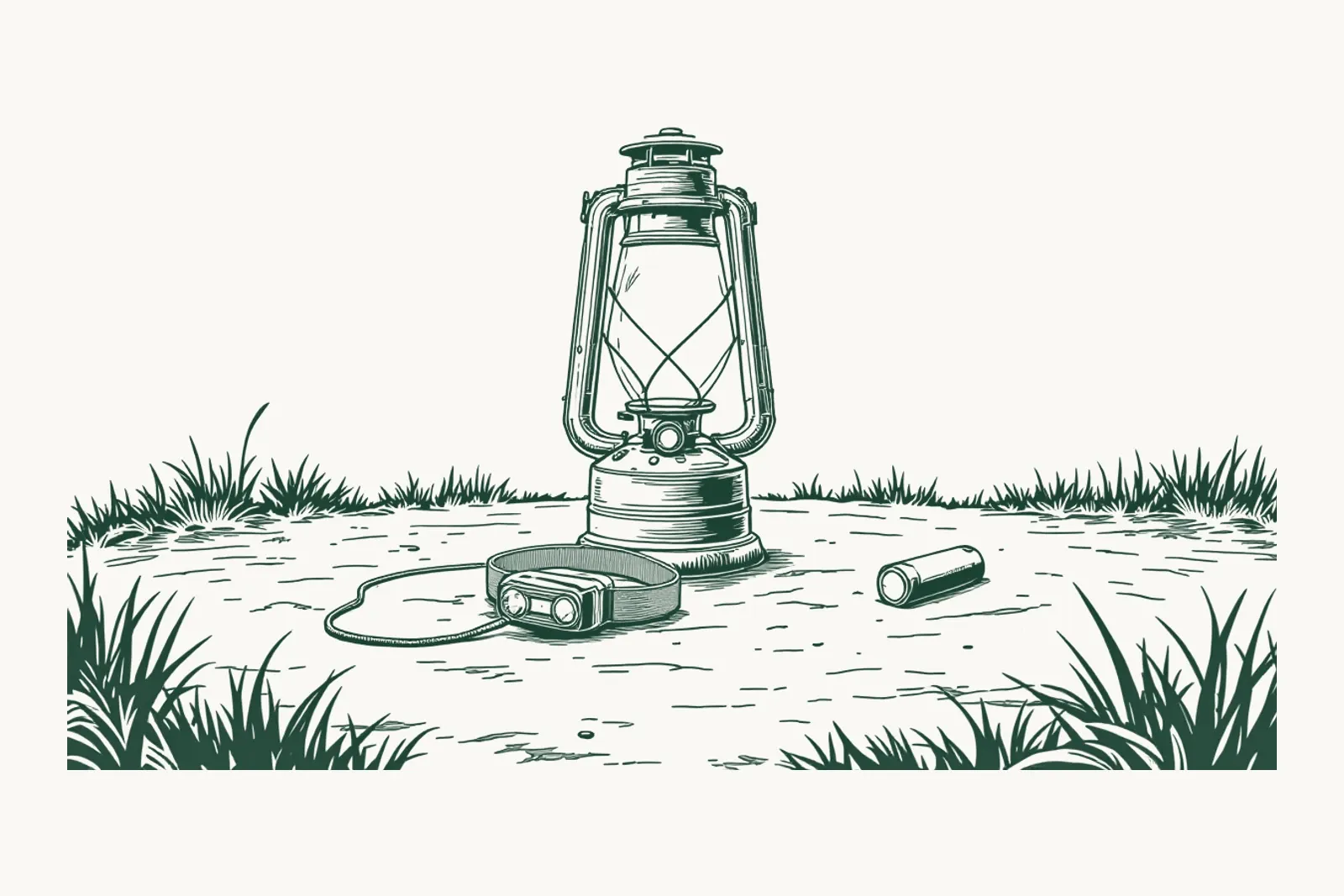
Battery, USB, dynamo or gas lanterns; head torches with red-light mode: what the numbers actually mean before you buy camp lighting.
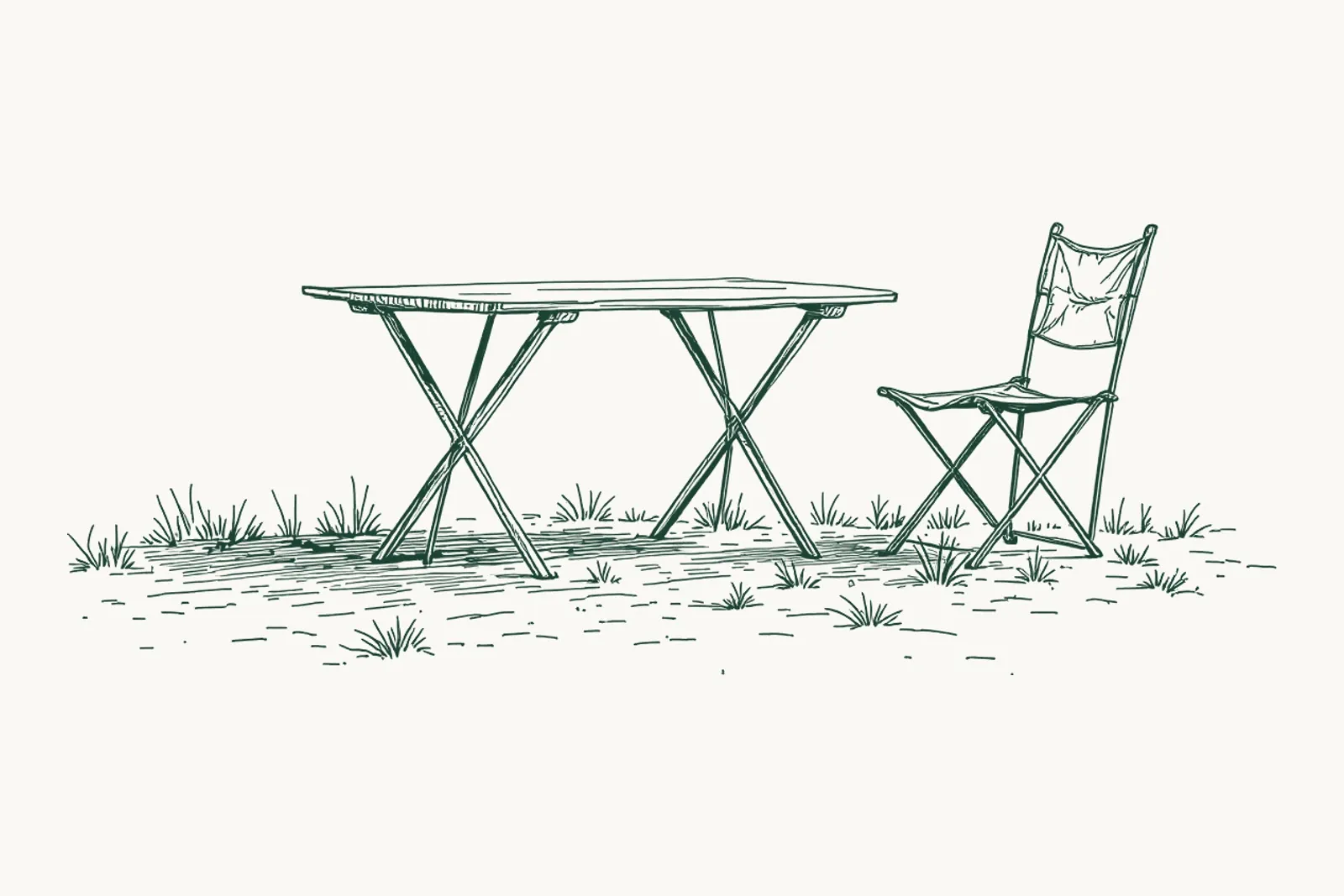
Suitcase or roll-top tables, low chairs, steel or aluminium folding frames: seat height, stability on soft ground and weight, compared properly.