Campsite electricity: what can you plug in on 6 A or 10 A?
A kettle and a hair dryer together on 6 A? No. What the amps on your pitch actually mean, and what you can run without tripping the breaker.
Travelling by motorhome or caravan shifts the equipment question: the accommodation is already there, and most of the kit exists to make the vehicle self-sufficient and to organise life outside it.
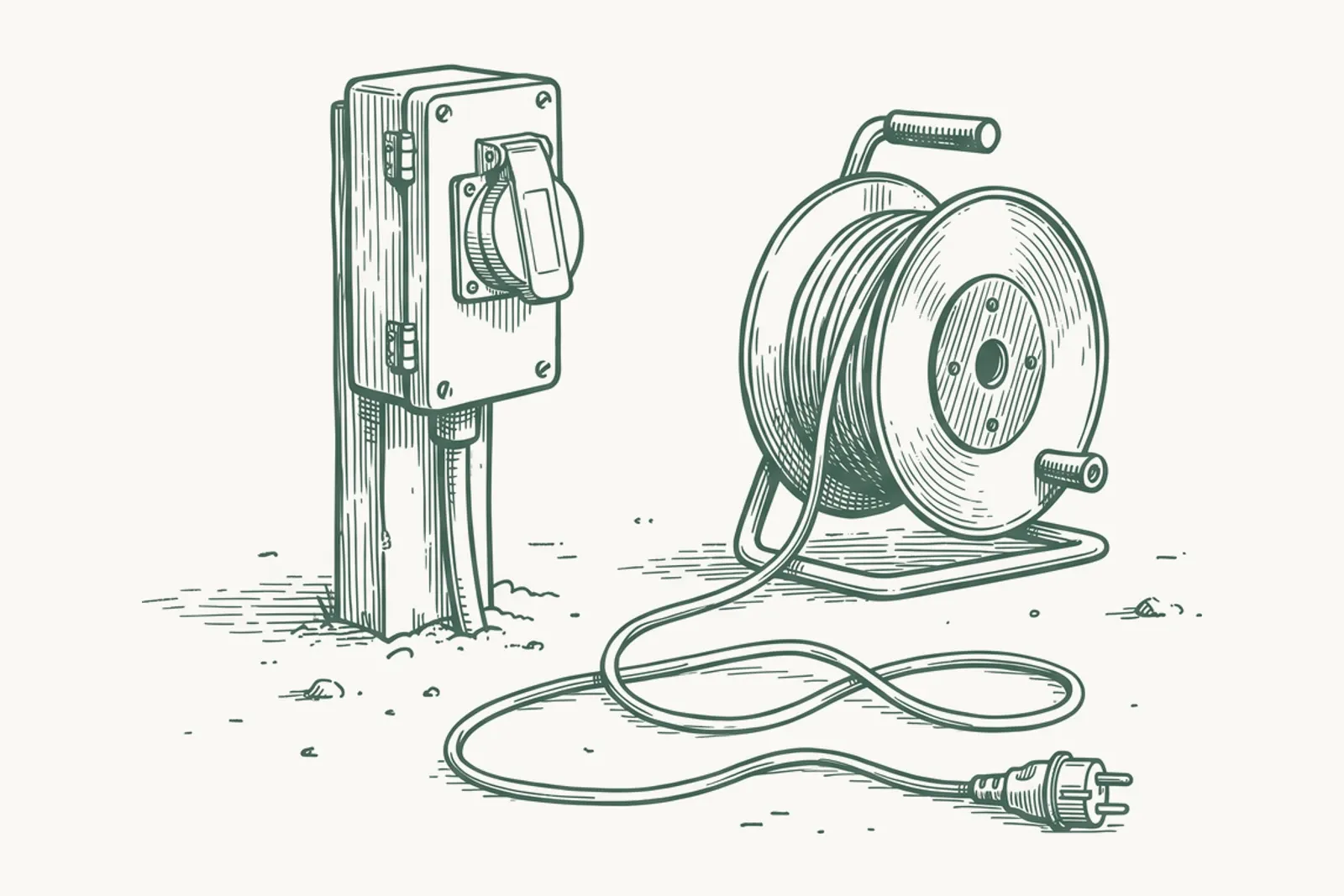
Electricity first. A leisure battery runs the lighting, the water pump and the fridge on 12 V. Hooking up to a campsite’s 230 V recharges it; away from sites, a solar panel or an alternator charger takes over. Carrying a 25 m hook-up cable and the right plug adapters saves a lot of unpleasant surprises on arrival.
Water next, with a fresh tank and a grey tank whose capacities determine how many days you get between service points. A dedicated food-grade hose, a funnel and a tank cleaning product make up the minimum.
Gas last, for cooking and often for heating. Check that the regulator and hoses are in date, and find out which bottle formats are available in the countries you will cross.
The awning is the main gain in comfort: it doubles the usable area and shelters the door. Add a groundsheet, a table and folding chairs and it becomes the real living room of the trip. Our camp furniture section covers choosing those pieces.
Levelling ramps and a spirit level sort out a sloping pitch in minutes, which matters for an absorption fridge to work properly and for sleeping well. Inside, the rule is to secure or wedge anything that can move while driving: closed storage and a few non-slip mats remove most of the noise and the breakages.
A kettle and a hair dryer together on 6 A? No. What the amps on your pitch actually mean, and what you can run without tripping the breaker.