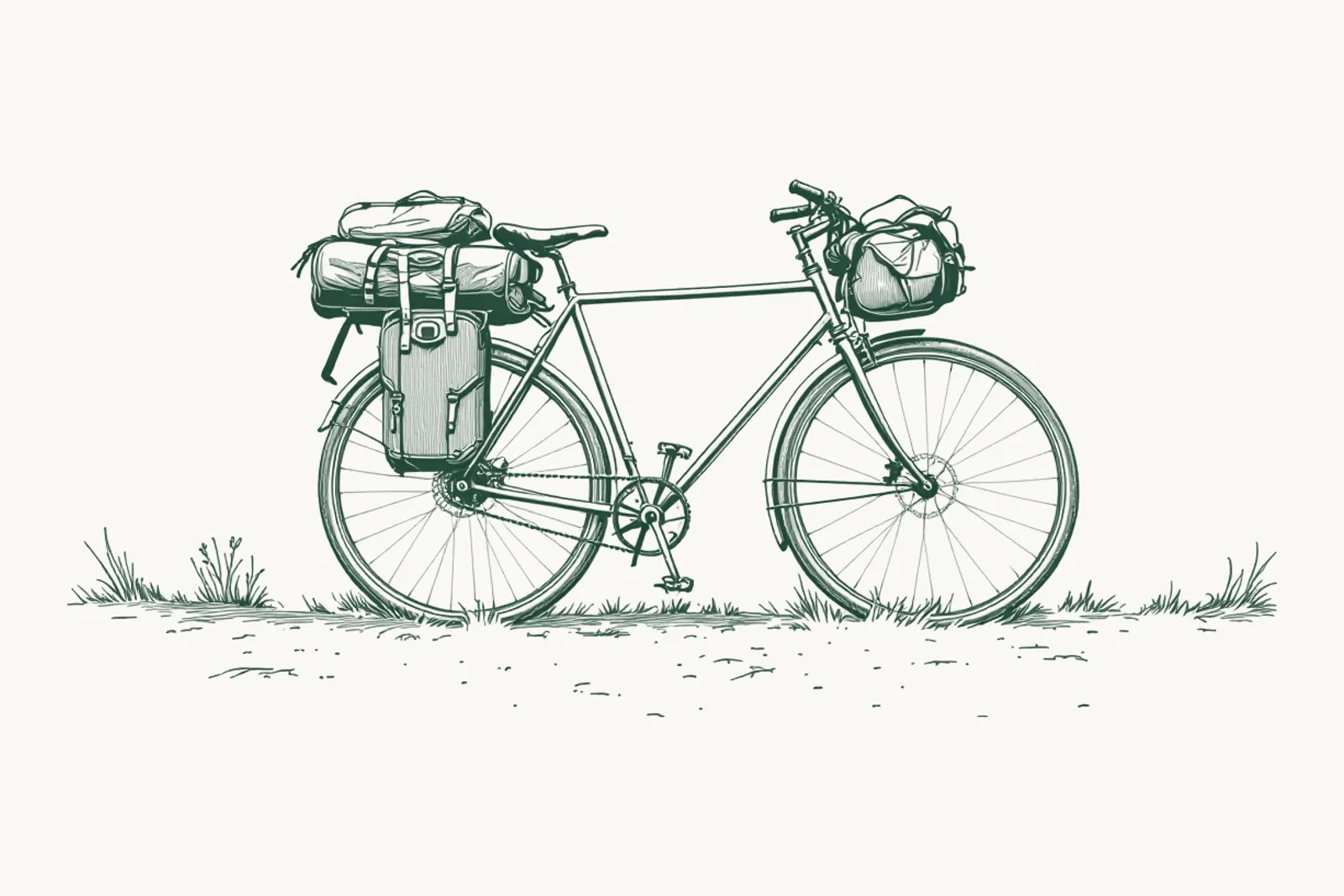
Essential gear for bike touring
Gear for a bike tour: panniers or bikepacking bags, repair kit, camp setup, clothing and safety. Load distribution and a departure checklist.
On foot, everything you own travels on your shoulders: the logic stops being about adding comfort and becomes about removing what you will not use. Bivouac adds a regulatory dimension, since it means a single night spent in open country, generally from dusk to dawn, and is governed differently from one area to the next.
A reasonable load sits around 20 % of your body weight, water and food included. Three items hold most of the mass: the shelter, the sleep system and the backpack itself. Working on those three saves kilograms, where sorting through small accessories saves a few hundred grams.
Volume follows duration and season: roughly 30 to 40 litres for a summer overnight, 50 to 65 for several days or shoulder season. The decisive criterion is not the brand but the back length, which must match your build: that is what transfers about 70 % of the load onto your hips rather than your shoulders.
Shelter ranges from a freestanding tent to a tarp, by way of a bivvy bag. The more minimal the shelter, the more you need to read the forecast correctly and pick your spot well. The sleep system follows the same logic as everywhere else: an insulating mat first, then a bag chosen on its comfort temperature.
Our dedicated guide covers all of it as a list: bivouac gear list. For bike travel, where volume constraints replace weight ones, see bike touring gear.
Bivouac rests on one principle: leave nothing behind. That means carrying a bag for your rubbish, moving away from water for any washing, giving up fires where they are banned, and striking camp early in the morning.
Gear for a bike tour: panniers or bikepacking bags, repair kit, camp setup, clothing and safety. Load distribution and a departure checklist.
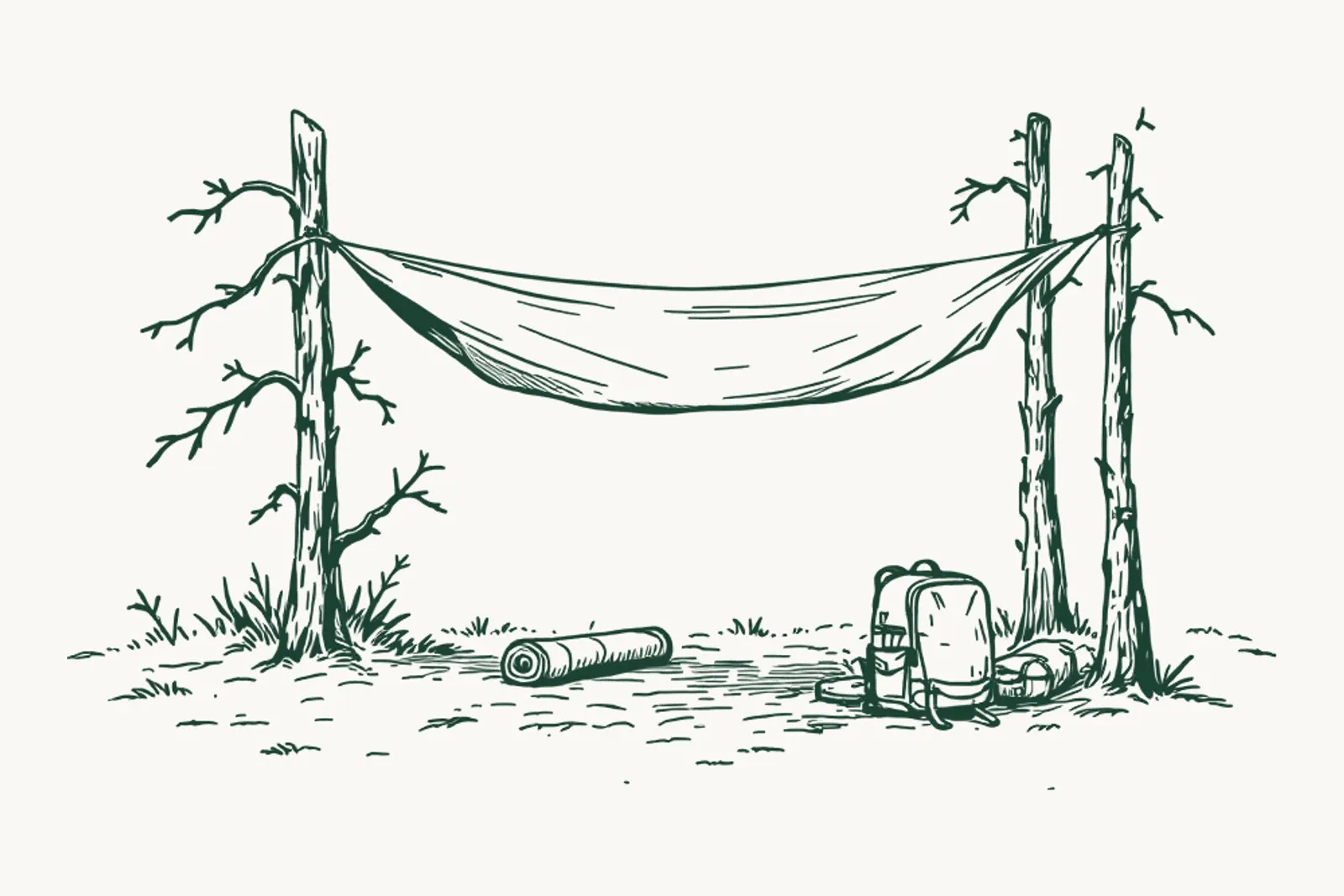
The bivouac gear list: lightweight shelter, sleep system, minimal cooking, safety and navigation. Reference weights, regulations and good practice.